
About Intersex Youth
Sports
Sports
When it comes to the topic of sports, intersex youth face very specific barriers in their right to participation in sports on an equal footing to their endosex peers. Over the past years, the impact of exclusionary sports policies and guidelines which mandate invasive and humiliating sex-testing for participation in the female category, have had serious impacts on intersex youth.
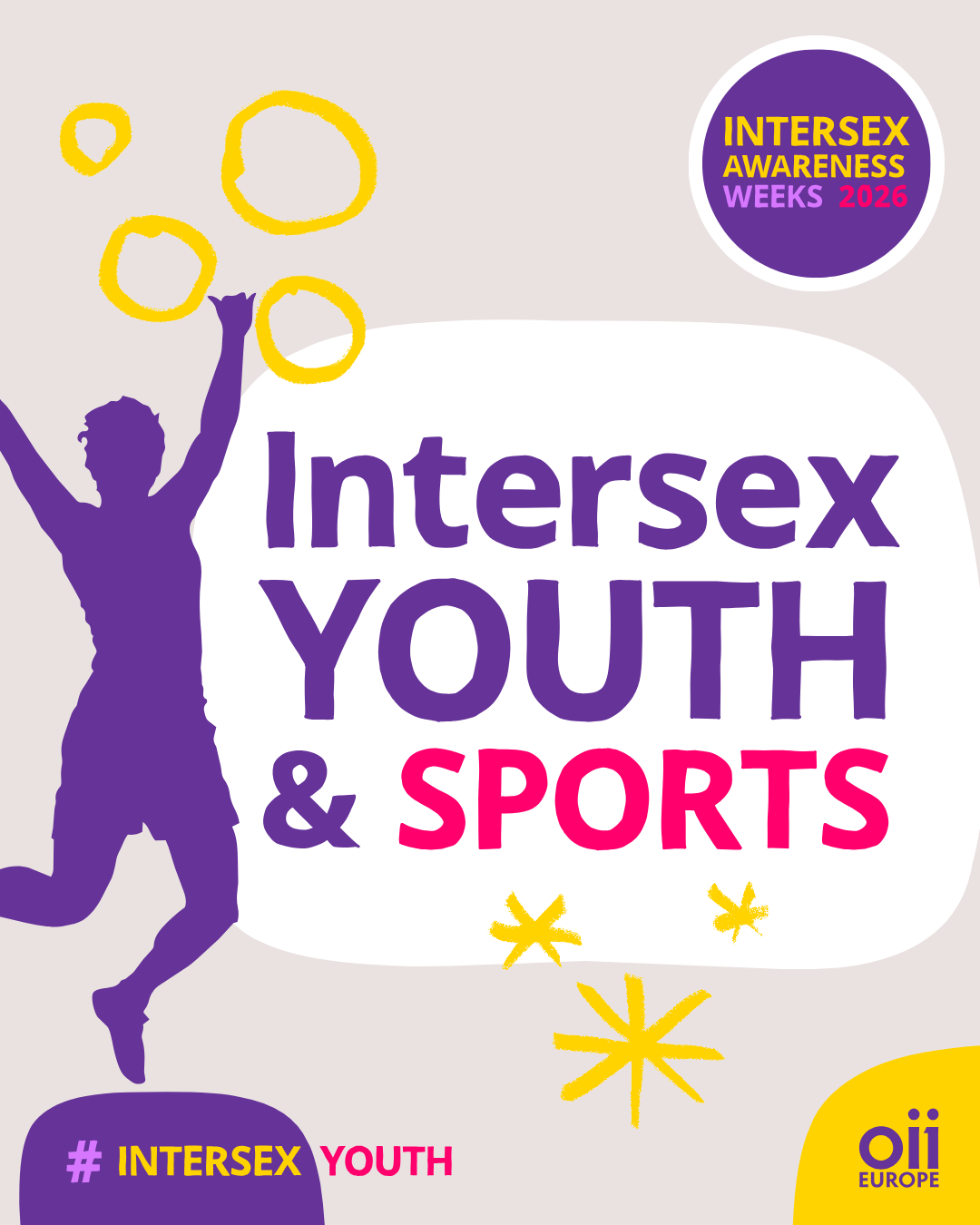
“As a kid I loved going to swim, now I never go to swim in public pools, because I don’t feel comfortable there as an intersex person. I miss swimming very much.”
Intersex participant in the “Intersex Lives” Campaign, 2020
International Human Rights
Sport is recognised under international human rights law, including Article 27 of the Universal Declaration of Human Rights and Article 15 of the International Covenant on Economic, Social and Cultural Rights, as part of the right to take part in cultural life.
Persistent gender norms in schools, clubs and families shape who is seen as belonging in which sport. Many LGBTQI youth feel compelled to conform or self-censor, while those who are visibly gender non-conforming face the harshest barriers1. The mere prospect of public scrutiny, body shaming, and invasive testing drives many intersex children to quit or avoid sports entirely.
New regulations such as the July 2025 World Athletics Eligibility Criteria2 and the new 2026 IOC guidelines3, blatantly ignore the impact that these restrictive rules will have, specifically on intersex youth. There is no doubt that these new rules and guidelines will keep young people from participating in any kind of sports, when faced with the knowledge that they will have to undergo invasive procedures in order to be able to compete on top level once their talent and abilities begin to show. It is concerning that these decisions are also taken without any solid scientific evidence demonstrating what the long term effect of those measures can have on the bodies of young athletes, should they decide to concede to the new requirements.
We know that the majority of sports participation lies at the community level, and intersex youth are hit hard by the trickle down impact of exclusionary guidelines and mandatory sex tests. In higher levels of sport, regulations have historically coerced young women with high natural testosterone into undergoing unwanted gonadectomies (removal of reproductive organs) or hormonal suppression therapies just to retain eligibility, violating basic human rights
Hateful rhetoric and misinformation about intersex youth, especially young intersex women and girls, have real-life consequences. They perpetuate harmful stereotypes and a fixed and binary understanding of gender and sex, increasing the risk of violence against intersex women and girls within and outside sports.
We stand against the increasing over-policing, medicalisation, and pathologisation of intersex youth’s bodies under the guise of fairness. Requirements to invade peoples’ bodies affects everyone’s bodily autonomy negatively. Attempting to biologically classify and categorise people is a dangerous and slippery slope.
Sports empower intersex youth, offer a sense of community, teach us about bravery, dedication and teamwork, help us to build essential social skills, and dispel entrenched notions about the capacities and limits of the body. These are all key values that help us further in life. For many, participation in sport is an important part of the educational journey.
Footnotes
- From the sidelines to the playing Field, IGLYO report, 2025 ↩︎
- https://www.oiieurope.org/world-athletics-decides-to-mandate-sex-testing-for-women-athletes/ ↩︎
- https://www.oiieurope.org/oii-europe-statement-on-the-new-ioc-framework/ ↩︎
Relevant Resources
Trans, Gender Diverse and Intersex Inclusion in Sports is a Human Right
Trans, Gender Diverse and Intersex Inclusion in Sports is a Human Right – Joint statement by ILGA World and Sport & Rights Alliance, 2024

LGBTQI Youth Perspectives on Inclusion in Sports
From the Sidelines to the Playing Field: LGBTQI Youth Perspectives on Inclusion in School and Community Sport – IGLYO — The International LGBTQI Youth & Student Organisation launches a powerful new qualitative study centring the lived experiences of LGBTQI young people in school and community sport and putting forward recommendations to create more inclusive sport environments.