
About Intersex Youth
Education
Education, School and University
Intersex youth deserve an education where they can develop their full potential, safe & free from harassment & discrimination, and that represents them in an affirmative, positive & non-stigmatizing manner.
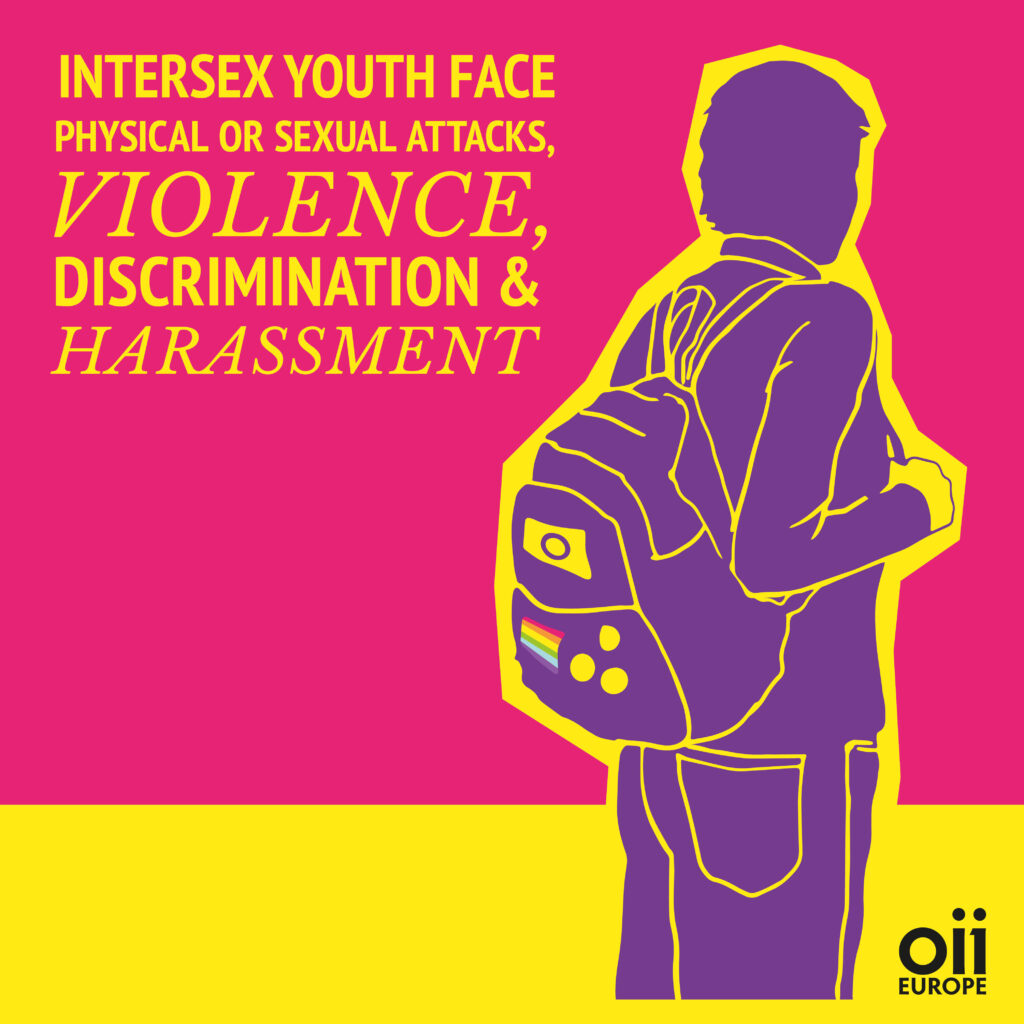
Meanwhile, school or university can be a difficult place for intersex youth: They experience bullying, discrimination and stigmatisation in educational settings. Textbooks and educational programs usually lack positive intersex representation, and, as the recent FRA LGBTI Survey 2019 shows, 54% of intersex respondents felt discriminated against by school or university personnel.
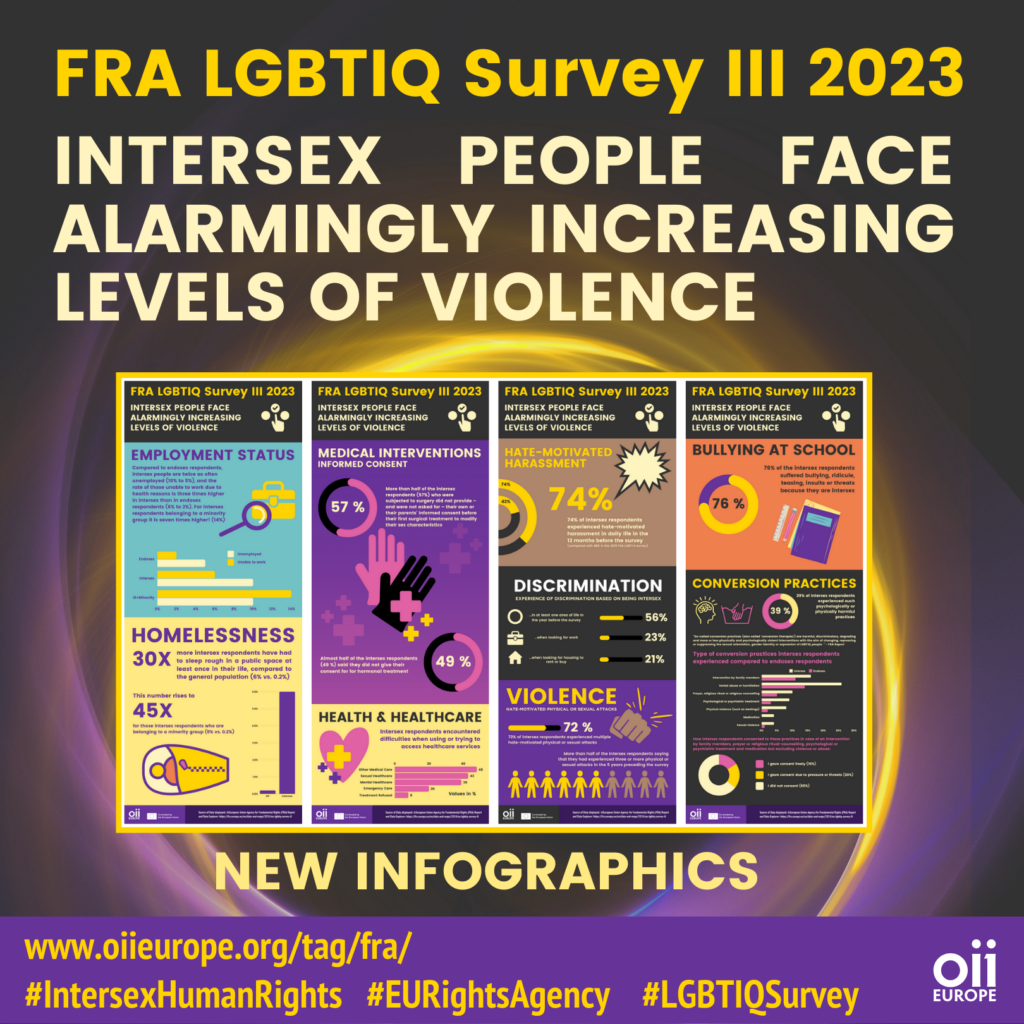
In 2023, the EU Fundamental Rights Agency surveyed LGBTIQ people across Europe, with far more intersex respondents than ever before. What it found: rising levels of violence in everyday life. 76% of intersex respondents said they were bullied, ridiculed, insulted or threatened in school, because they are intersex, in the year before the survey.
Infographics on the situation for intersex youth in Europe
Infographics – Findings from the FRA LGBTIQ Survey 2023
It all starts with education
It all starts with education, the most effective prevention measure of all. Many different resources exist, to firstly, teach us about diversity and its values but also to empower teachers to tackle these issues when they arise in the classroom.
Inclusive education is about ensuring that spaces are safe for intersex youth, and that every child or young person sees themselves in the classroom (and the curricula!). Schools can also only be safe where school policies and teachers take anti-bullying seriously. It all comes back to education that focuses on diversity, inclusion and fostering a climate of acceptance.
OII Europe supported the creation of 3 tools aimed at fostering SOGIESC inclusive school curricula and environments. Together, the three tools form a coherent package that connects policy frameworks, narrative resilience and educators’ competences into a systemic approach to advancing LGBTQI-inclusive education. Soon to be published by the Council of Europe.
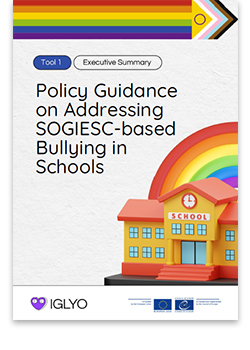
Tool 1:
Policy guidance on addressing SOGIESC-based bullying in schools
…offers a rights-based, adaptable framework to help education systems: prevent and respond to SOGIESC-based bullying and (cyber)bullying; protect learners’ safety, dignity and participation; equip education authorities and schools to act, even in restrictive or polarised contexts.
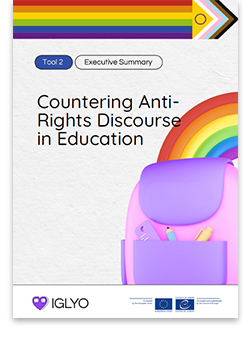
Tool 2:
Countering anti-rights discourse in education
…offers an evidence-based, practice-oriented framework to help schools: protect students’ safety and dignity; support and protect educators; uphold democratic, inclusive education in the face of organised backlash.

Tool 3:
Framework for a training module on SOGIESC for educators
…is primarily aimed at education authorities, teacher-training institutions, universities and civil society organisations involved in the development or delivery of teacher-education modules that integrate LGBTQI inclusion. It can also inform the work of ministries of education, equality bodies, teacher unions and international organisations seeking to embed SOGIESC inclusion within broader education strategies and policies, as well as school leaders, counsellors, psychologists and other education professionals who play key roles in preventing bullying and fostering inclusive school cultures.
These three interconnected toolkits offer a systemic approach to creating safe, inclusive schools for LGBTQI youth. Rather than isolated initiatives, they embed protection across entire education systems: from policy and curricula to teacher training, school environments, and community partnerships. The underlying premise is clear: SOGIESC-based bullying and exclusion are preventable when institutions make a commitment. Safety, inclusion, and belonging aren’t individual responsibilities or optional extras but rather they’re systemic commitments that require political will, institutional accountability, strong leadership, and genuine collaboration between schools, educators, families, and communities. When schools are backed by clear policies, trained teachers, and community support, they can truly protect students’ dignity and participation.
Council of Europe resources on SOGIESC inclusive education materials:
Education, Employment, Homelessness
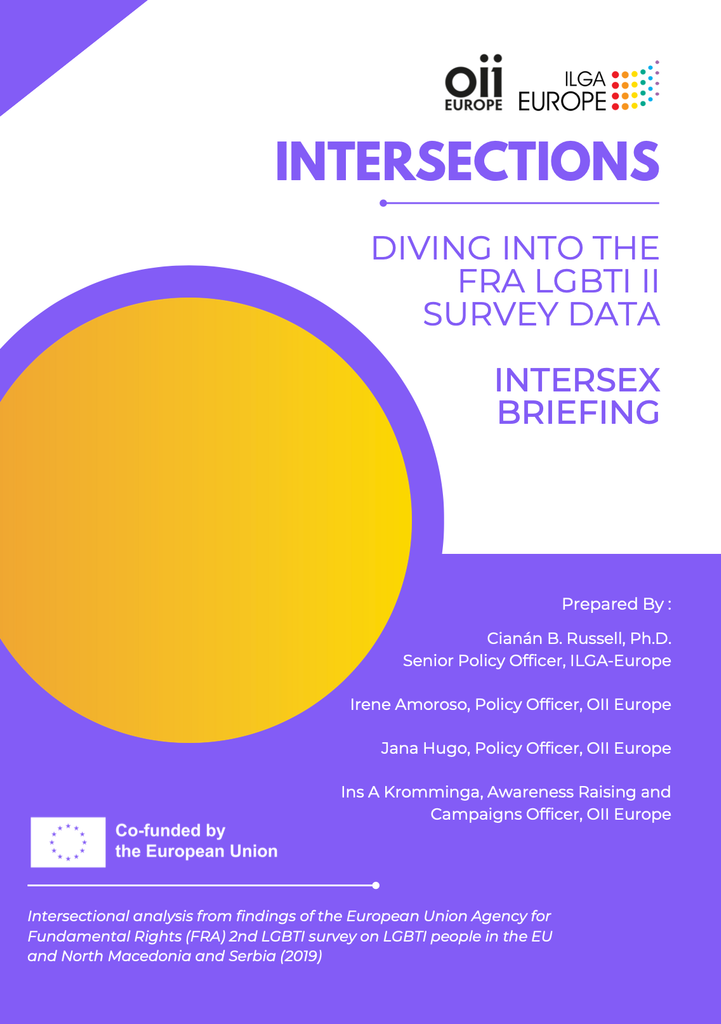
OII Europe’s and ILGA Europe’s Intersections: The LGBTI II Survey – Intersex Analysis reveals that intersex youth face barriers in employment often in relation to lack of education as a result of pathologisation and related trauma experienced from an early age. But the crisis extends further: identity-related family conflict and domestic violence drive many intersex youth into homelessness creating additional barriers to education and work. The data is stark: according to the FRA LGBTI Survey III (2023), intersex respondents experienced homelessness 30 times more often than the general population. These aren’t separate issues. They’re interconnected consequences of systemic harm that can be changed if we act on it.
Building intersex-inclusive education across 49 countries
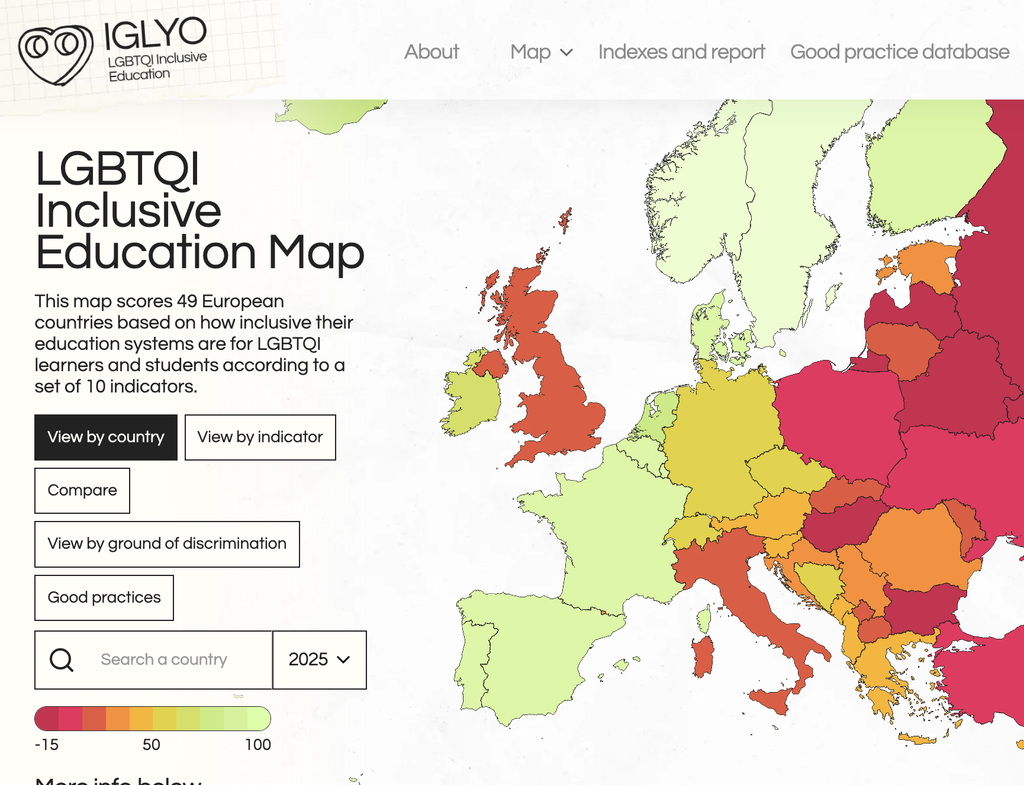
IGLYO’s comprehensive review of 49 european countries shows where intersex and lgbtq protections in education exist and where they’re missing. According to the most recent (2025) data, 14 countries1 currently have anti-discrimination legislation applicable to education that cover the ground of sex characteristics and 14 countries2 have national education policies and action plans that refer to variations of sex characteristics to make schools safe, inclusive and supportive. In 5 countries3, there is a mandatory curriculum that teaches about variations of sex characteristics. However, when it comes to mandatory teacher training, only Spain sets out that the training includes sex characteristics.4
Some Good Practice examples from education
France introduced in 2025 a new program (EVARS) for the education on emotional and interpersonal relationships and sexuality in schools. The program5 teaches about variations of sex characteristics in the 3rd year of middle school (Quatrième, around 13-14 year olds), first year of high schools (Seconde, around 15 year olds) and in the first year of formation at CAP (Classes préparant au certificat d’aptitude professionnelle) schools. According to the introductory document that the Ministry of National Education (Ministère de l’Éducation Nationale) published in February 2025, the program aims that students are aware of the biological differences between women and men; they understand that the male and female reproductive systems are comparable (the clitoris and the penis are composed of erectile tissue that generates pleasure; the ovary and the testicle produce reproductive cells), and that there are intersex people who are born with sexual characteristics (chromosomes, hormones, genital organs) that do not correspond to the typical definitions of female or male bodies.6
In Finland, the Government Decree on Maternity and Child Health Clinics and School and Student Health Care7, released in 2026, includes intersex students, by decreeing that particular attention must be paid to intersex students in the sexual health counselling processes at schools.
Multiple organisations, political parties and local governments, including Utrecht, Amsterdam, Den Haag and Nijmegen, have signed the Dutch Intersex Declaration8, an initiative by NNID. By signing the declaration they “commit to being more intersex inclusive, to intersex emancipation and acceptance of sex diversity. The organization achieves this by structurally incorporating sex diversity into its policies, with policy plans being implemented across the organizations and in a broad sense.” However, according to what NNID reports, local municipalities have become more hesitant in signing the Dutch Intersex Declaration due to the social outlook on LGBTI issues, adding on the already challenging struggle for intersex human rights.
Finland’s intersex organisation ISIO develops growing cooperation with children’s rights organizations through blogs, news paper articles, and statements. Most political parties in Finland have outlined in their plans to ban IGM, as a result of ISIO’s initiatives.
Footnotes
- Albania, Belgium, Bosnia and Herzegovina, Denmark, Finland, Greece, Iceland, Malta, Montenegro, Netherlands, Portugal, Serbia, Spain, Sweden ↩︎
- Albania, Belgium, Bosnia and Herzegovina, Denmark, Finland, Greece, Iceland, Luxembourg, Malta, Montenegro, Norway, Portugal, Spain, Switzerland ↩︎
- Belgium, France, Malta, Portugal, Spain ↩︎
- See more on the LGBTQI Inclusive Education Map ↩︎
- France Program ↩︎
- France Program ↩︎
- Finland Goverment Decree ↩︎
- Dutch Intersex Declaration ↩︎