
About Intersex Youth
Access to Health Care
Access to Health Care
Obstacles
When it comes to accessing quality healthcare that is tailored to the needs of intersex youth, the path is filled with various obstacles.
1
Because many intersex persons only ever receive information about their bodies from a pathologising and medicalising perspective rather than from a human-rights based or care-centred approach: most healthcare professionals lack the knowledge or skills to speak to young intersex people about their bodies, as their models of care are rooted in the gender binary
2
Because many intersex young persons might have undergone medically unnecessary non-consensual medical interventions on their sex characteristics in healthcare settings, they might avoid seeking care due to the trauma or negative experiences associated with hospitals, doctor’s offices or other kinds of healthcare1
What is IGM?
IGM stands for “Intersex Genital Mutilation” and it is a harmful practice which entails surgical and medical procedures, or hormonal treatments on the sex characteristics of an intersex person, often performed at a very early age, without the person’s free, personal, prior and fully informed consent.
IGM has been identified as a harmful practice by the UN High Commissioner for Human Rights, UN treaty bodies, the Commissioner for Human Rights of the Council of Europe, the Parliamentary Assembly of the Council of Europe, the European Commission and the European Parliament, among others.
To date, a small number of Council of Europe Member States have adopted legislation prohibiting IGM.
Childhood
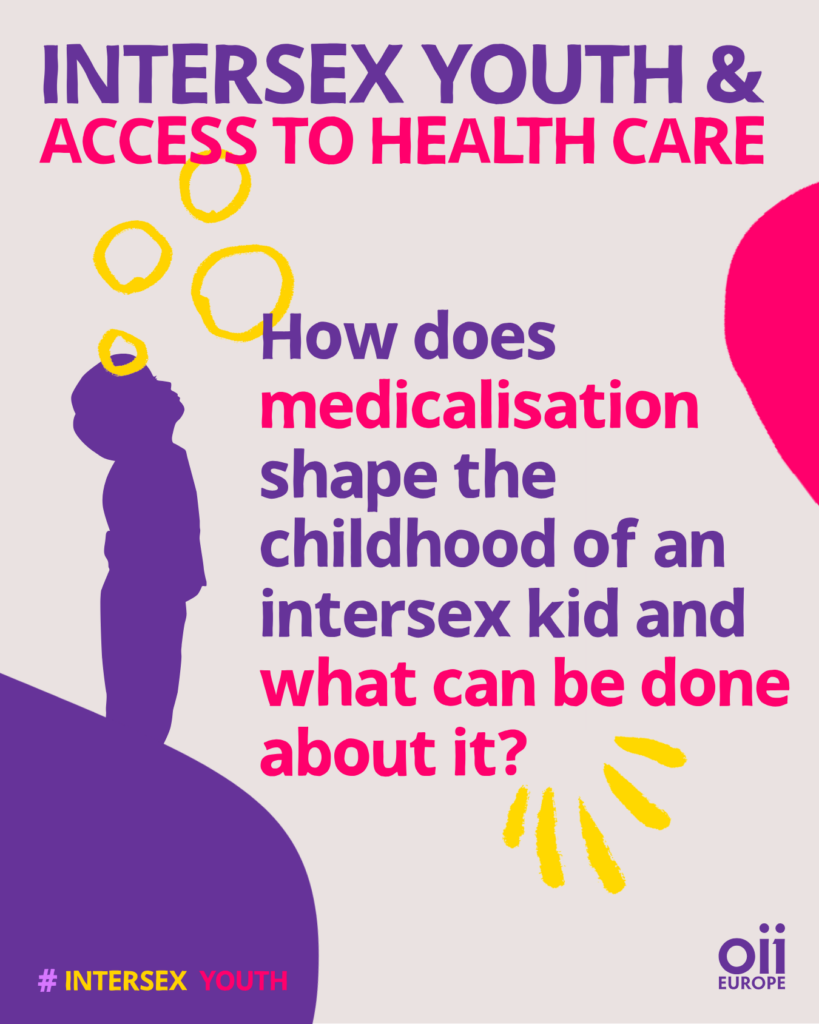
Intersex children face the risk of a disturbed family life due to medicalisation, which can include extended and/or multiple hospitalisations, multiple surgeries and/or procedures, invasive testing, administration of medication including hormone therapies, and clinical research practices. Intersex youth are also at risk of not being able to develop their full potential and of dropping out of school due to the effects of medicalisation and related trauma, such as post-traumatic stress disorder, chronic illness or disability.
Puberty
Navigating puberty and certain changes in one’s body is no easy feat, and for intersex youth, this time of their lives may be characterised by a lack of information, secrecy, shame or confusion. Some intersex people may only find out during puberty that they are intersex / have a variation of sex characteristics. Some intersex persons might learn the truth about non-consensual medical interventions on their sex characteristics they were subjected to when they were younger during this time as well. Most often, intersex youth lack the support systems they might need during this time, especially for intersex youth who might have strained family relationships.
In addition, intersex youth might not receive any information that speaks to their realities during for example comprehensive sexuality education at school, due to the invisibilisation of intersex realities and the lack of inclusion about intersex topics in school curricula
Support and information
Many intersex youth turn to the internet, intersex organisations or peer support groups (online or in person, where they exist and are available) to access community resources or to look for information about and/or seek support related to the changes they might notice in their bodies, or the lack of changes they were expecting to undergo, but haven’t yet. Online spaces can therefore be a very important space of care and support as well as a source of information about health-related issues or questions. At the same time, online spaces can also be a space where negative comments, hate speech or bullying takes place.
Transition of care for adolescents and young adults
As intersex youth transition from their teenage years to young adulthood, they might face significant hurdles in accessing adequate healthcare, as there is lack of time, funding and inadequate transfer of medical information and history from paediatric to adult care. The lack of adult care providers and psychosocial support often leaves young intersex adults to navigate the health care system alone, as they leave paediatric care. Retelling or recounting one’s medical history can be incredibly traumatic and may deter young people from seeking care in early adulthood.
OII Europe advocates for the provision of quality healthcare rooted in a human rights approach, as well as the full, age-appropriate access to medical records and for comprehensive explanations of their own biology. Only by completely dismantling the historical culture of medical secrecy and pathologisation, and by providing psychosocial and peer support, can we ensure that intersex youth are able to fully enjoy their right to health.
Relevant Resources
Depath intersex campaign:
In 2023, OII Europe launched a campaign during Intersex Awareness Week to help people gain an understanding of what pathologizing intersex means, why it has to stop and how we can start depathologizing intersex.
FRA health infographics:
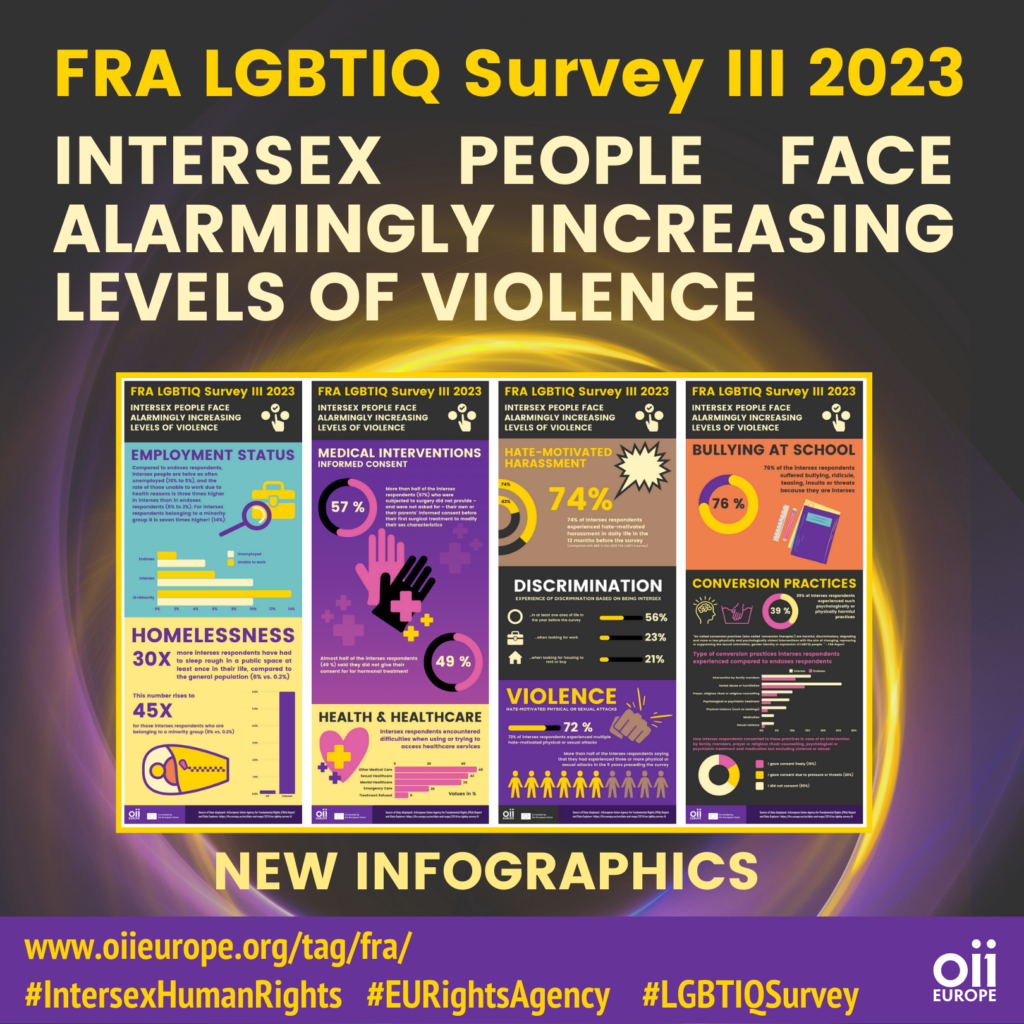
OII Europe created infographics using the data from the latest FRA LGBTI III survey.
“I want to be like nature made me”
Human Rights Watch report (2017)